
Food & Home
Chia Seeds: How to Read the Label and Choose Your Bag
A great bag of chia seeds starts with a simple label check. I’m Jack, BIOVEA Wellness Advisor, and here’s how I compare ingredients, serving sizes, fibre and omega-3s—then put these versatile little seeds to work.
- Written by
 Jack· BIOVEA Wellness Advisor
- Published
- September 25, 2026
- Last reviewed
- September 29, 2026
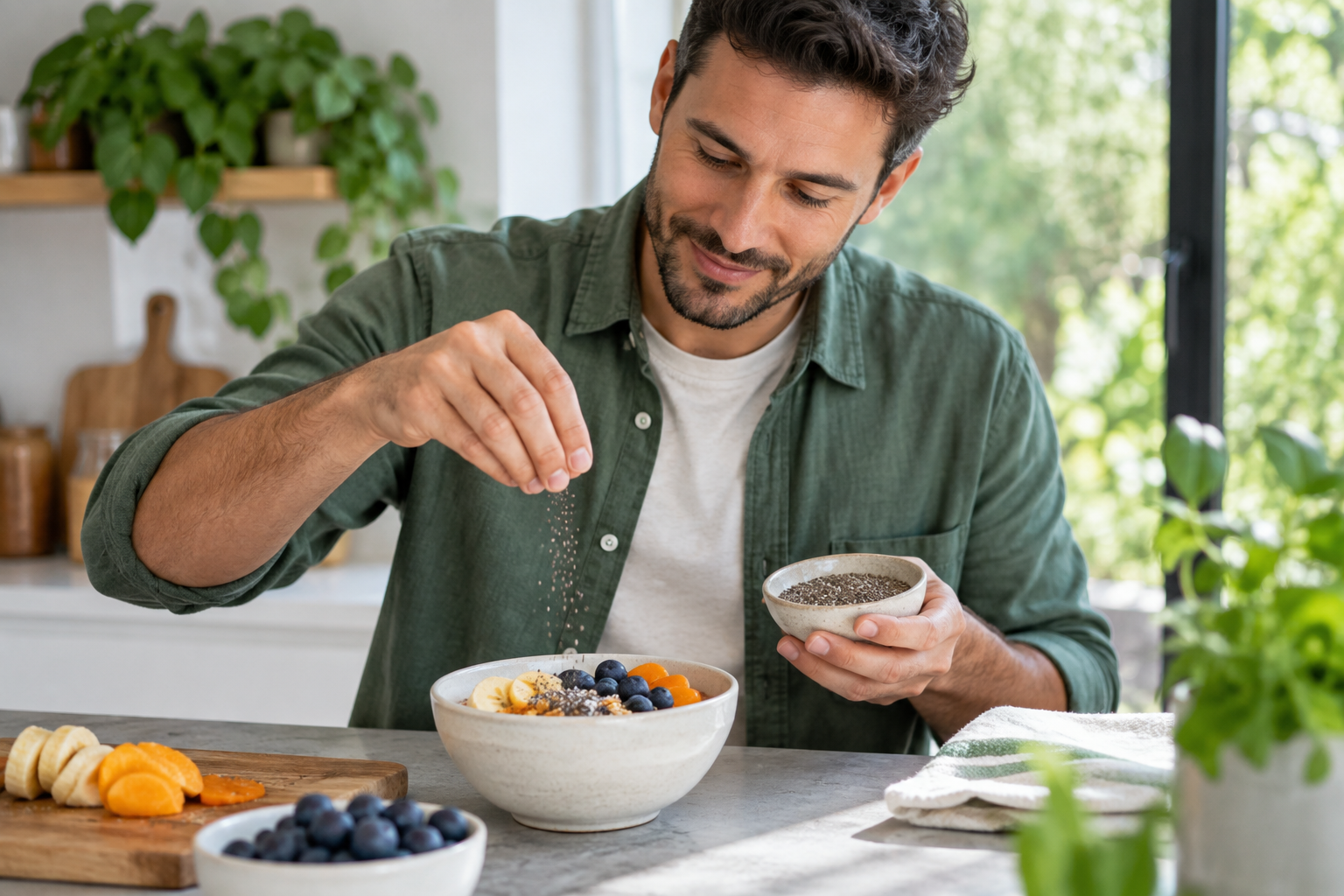
1. Chia seeds ingredients: look for a simple list
Chia seeds bring a mild flavour and an easy texture boost to porridge, yoghurt and smoothies. For a plain bag, start with the ingredients list: you’re looking for chia seeds, or organic chia seeds if that’s your preference. You may also see their botanical name, Salvia hispanica.
A chia pudding mix or seed blend is a different product from plain seeds. Check for other ingredients, such as sweeteners, flavourings or additional seeds, and choose the option that suits your recipes. A blend can be convenient; plain chia gives you more control over the finished dish.
2. Chia seeds nutrition: compare the serving size first
Before comparing calories, fibre or protein, check the serving size in grams. Two bags can appear quite different nutritionally simply because their labels describe different amounts. If both provide values per 100 g, that’s a handy like-for-like comparison.
The serving size is a reference for the nutrition figures, not a personalised daily target. Match the numbers to the amount you actually use: if you use half the listed serving, you’ll get roughly half the listed nutrients. A kitchen scale can help you get familiar with your usual scoop.
3. How much fibre and protein are in chia seeds?
Chia can contribute both fibre and plant-based protein to meals, but the figures on your bag are the best guide to your portion. MedlinePlus explains that dietary fibre helps digestion and can help you feel full. Look at grams of fibre per comparable serving rather than relying only on front-of-pack descriptions.
Check protein separately, too. A spoonful of seeds can complement a meal without being its main protein source. For an easy breakfast, stir chia into yoghurt or a protein-containing plant-based alternative, then add fruit. If the label lists calcium or other minerals, compare those using the same serving size as well.
4. Chia seeds omega-3: what does ALA mean?
One of chia’s appealing features is its plant-based omega-3 content. According to the NIH Office of Dietary Supplements, chia seeds provide alpha-linolenic acid, or ALA—an essential fatty acid that must come from food.
ALA isn’t the same as EPA and DHA, the omega-3s commonly associated with fish and algae products. The body converts only small amounts of ALA into EPA and DHA. If a label highlights omega-3, look for the type and amount per serving when provided; total fat alone doesn’t tell you how much ALA is present.
5. Organic chia seeds: what should you look for?
If organic matters to you, look for a clear organic description and certification information on the packaging. Keep that preference separate from your nutrition comparison: words such as “organic,” “raw” or “superfood” don’t tell you the grams of fibre, protein or omega-3 in your portion.
For a relevant BIOVEA option, consider CHIA SEEDS (Organic, Plant-Based, Superfood), available in a 227 g bag. Use the same checklist when shopping: review the ingredient list, compare the nutrition information and choose a pack size you’ll enjoy using regularly. To compare value across different bag sizes, calculate the price per 100 g using the current prices.
6. How to use chia seeds and store your bag
Choose a format that matches your routine: whole seeds are convenient for adding texture, while milled chia blends more discreetly into recipes. Chia absorbs liquid and develops a gel-like texture, making it especially useful for overnight oats and puddings. Stir it into plenty of liquid, mix again to break up clumps, and let it fully hydrate before eating.
Before buying, check the best-before date and storage directions, then keep the bag well sealed as directed. Start with one easy habit—such as preparing tomorrow’s chia oats after dinner—rather than trying every recipe at once. Check the label or ask a qualified professional if you have questions about what fits your needs.
Frequently asked questions
- What should be on a plain chia seeds ingredients list?
- For a single-ingredient product, look for chia seeds or organic chia seeds. Salvia hispanica is the botanical name you may also see. Mixes can contain other seeds, sweeteners or flavourings.
- How do I compare chia seeds nutrition labels?
- Compare equal weights. Use the per-100-g figures when both labels provide them, or convert the values to the same serving size. Then compare fibre, protein, calories and any listed omega-3 content.
- Are chia seeds a source of omega-3?
- Yes. Chia seeds provide ALA, a plant-based omega-3. It differs from EPA and DHA, and the body converts only small amounts of ALA into those forms.
- Are organic chia seeds more nutritious?
- An organic description alone doesn’t establish that a bag contains more nutrients. Choose organic if it suits your preferences, and use the nutrition panel to compare the amounts in equal portions.
- Do chia seeds need to be soaked?
- For chia pudding and overnight oats, let them fully hydrate in the recipe’s liquid before eating. You can also stir them into moist foods, allowing time for them to absorb moisture. Follow the preparation directions for your product or recipe.
Sources
Jack used these official and scientific sources for this article.
This article is educational. Food supplements are not a substitute for a varied diet or medical care. Speak to a healthcare professional about your own situation.
Related reading
Food & Home
Healthy Pantry Staples: How to Choose the Right Format
Stocking your kitchen with nutrient-dense foods makes healthy eating effortless every day of the week. Learn how to choose between powders, whole seeds, and liquid pantry staples to fit your unique lifestyle.
7 min read
Read more
Food & Home
Herbal Tea Guide: How to Choose the Right Herbal Tea Format
Sipping a warm mug of herbal tea is one of the easiest ways to bring relaxation and vibrant natural flavors into your daily routine. Whether you prefer the convenience of traditional tea bags or robust herbal root brews, finding your ideal format can elevate your daily wellness ritual.
7 min read
Read more
Food & Home
Apple Cider Vinegar: How to Choose the Right Format for You
Discovering the daily benefits of apple cider vinegar is easier than ever thanks to a variety of versatile liquid and convenient capsule options. Here is Jack's guide to picking the ideal ACV format to seamlessly match your personal lifestyle and taste.
7 min read
Read moreCountry & language
1 published versions of this article.