
Hair Health
Shampoo Ingredients: How to Read the Label
Find your next wash-day favourite by learning what shampoo ingredients actually do—from cleansing sulfates to smoothing silicones. By Jack, BIOVEA Wellness Advisor.
- Written by
 Jack· BIOVEA Wellness Advisor
- Published
- September 25, 2026
- Last reviewed
- September 28, 2026
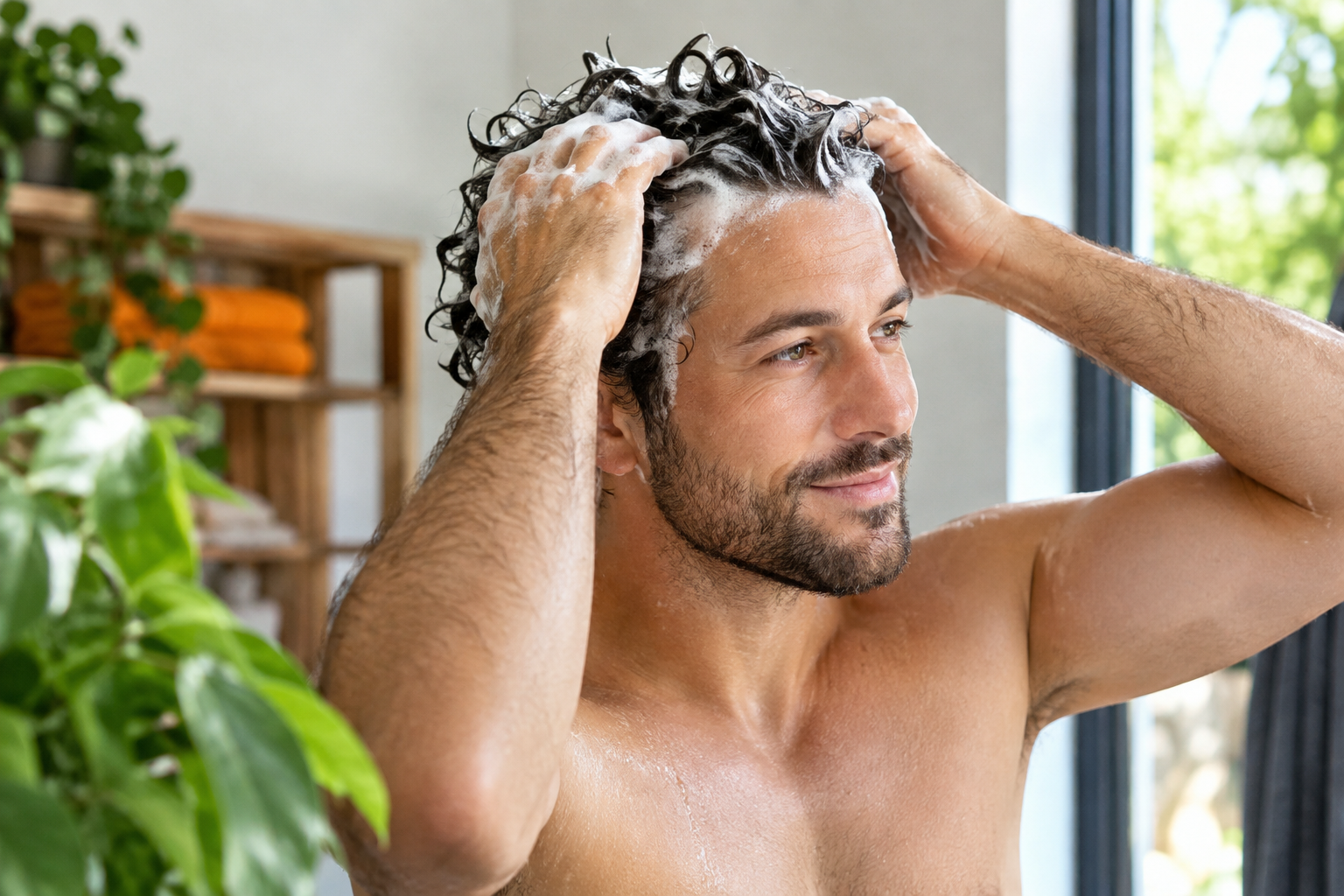
How to Read a Shampoo Ingredients List
The easiest way to understand a shampoo label is to look for ingredient groups rather than judge every unfamiliar name. Most formulas combine water, cleansing ingredients, conditioning agents and supporting ingredients that keep the product stable and pleasant to use.
Ingredients generally appear in descending order by amount, although those present at low levels may not follow that sequence. Water—often written as Aqua—usually comes first. Next, look for the cleansers and conditioning ingredients: they tell you more about the wash experience than a featured botanical on the front.
Sulfates in Shampoo: What Do They Do?
Surfactants are the ingredients that help water lift away scalp oil, styling products and everyday dirt. Common examples include sodium laureth sulfate, sodium lauryl sulfate and cocamidopropyl betaine. As the review “Shampoo and Conditioners: What a Dermatologist Should Know?” explains, shampoos often combine surfactants to balance cleansing with a comfortable feel.
A sulfate-based shampoo can suit hair that needs a thorough cleanse, while a sulfate-free option may appeal if your lengths tend to feel dry. Sulfate-free does not automatically mean gentler: the whole formula matters. Look beyond foam, too—more bubbles do not necessarily mean better cleaning.
Silicones and Moisturising Shampoo Ingredients
For smoother-feeling lengths, look for conditioning ingredients such as dimethicone, amodimethicone and polyquaternium compounds. These can help reduce friction and make hair easier to manage. The review “Hair Cosmetics: An Overview” describes how conditioning ingredients improve the feel and appearance of the hair fibre.
Glycerin is a humectant, while oils and fatty ingredients can contribute softness and lubrication. Dry, coarse or frequently styled hair may appreciate a richer formula; fine hair may prefer a lighter finish. Silicones are not automatically something to avoid—whether you enjoy them depends on your hair and the finished formula.
Shampoo Ingredients to Avoid: Look Beyond the Buzzwords
There is no universal shampoo ingredient blacklist that works for every head of hair. Fragrance, listed as Parfum or Fragrance, adds scent rather than cleansing performance; a fragrance-free formula can be a useful preference for a sensitive scalp. Preservatives also have a practical job: helping keep a water-based product protected from microbial growth.
Be equally thoughtful about hero ingredients such as biotin, keratin and plant extracts. Hydrolysed proteins can contribute to temporary conditioning, but their presence does not establish a hair-growth benefit. The NIH Office of Dietary Supplements notes that evidence supporting biotin supplements for hair health is limited; those supplement claims should not be treated as proof that a biotin shampoo grows hair.
Best Shampoo Ingredients for Your Hair Type
For oily roots, prioritise effective cleansing and a finish that does not feel heavy. For dry, curly or colour-treated lengths, look for a cleansing-and-conditioning balance that leaves hair manageable rather than stripped. Fine hair often benefits from a lighter feel, with extra conditioner focused on the ends instead of the roots.
If a moisture-focused formula sounds appealing, BIOVEA’s 2CHIC Avocado & Olive Oil Ultra-Moist Shampoo is an option to explore. Compare its current ingredient list with your preferences rather than choosing by the featured oils alone. A useful shortlist starts with your scalp’s cleansing needs and ends with how you want your lengths to feel.
How to Choose a Shampoo and Build Your Routine
Before buying, ask three questions: which ingredients cleanse, which help condition, and does the formula fit my preferences for scent and finish? Then judge it over several washes by how clean your roots feel and how manageable your lengths are. Change one product at a time so it is easier to spot what works.
Massage shampoo mainly into the scalp, rinse thoroughly and follow with conditioner where your hair needs it most. Adjust wash frequency to your oil levels, activity and styling routine rather than following a fixed timetable. If you have questions, check the product label or ask a qualified professional.
Frequently asked questions
- What ingredients should I look for in shampoo?
- Look for a combination of cleansers and conditioning ingredients that fits your hair. Surfactants remove oil and residue, while ingredients such as dimethicone and polyquaterniums can improve manageability. The complete formula matters more than any one ingredient.
- Is sulfate-free shampoo better for your hair?
- Not automatically. Some people prefer sulfate-free formulas for their wash-day feel, while others enjoy the thorough cleansing of a sulfate-based shampoo. Choose by how your scalp and lengths feel, not just the sulfate-free claim.
- Are silicones bad for hair?
- Silicones can help smooth hair, reduce friction and make detangling easier. Some formulas may feel too heavy for your preferences, but silicones are not inherently a poor choice. Consider the finish you want and your cleansing routine.
- Does biotin shampoo help hair grow?
- A biotin ingredient listing alone is not evidence that a shampoo promotes hair growth. Evidence for biotin supplements and hair health is limited, and it cannot be transferred to a rinse-off shampoo. Choose a shampoo primarily for cleansing, conditioning and manageability.
Sources
Jack used these official and scientific sources for this article.
This article is educational. Food supplements are not a substitute for a varied diet or medical care. Speak to a healthcare professional about your own situation.
Related reading

Hair Health
Best Hair Oils: How to Choose the Right Format for Your Hair
Finding the ideal hair oil format can completely transform your daily routine with beautiful shine and deep hydration. Discover how to pick between rich oils and lightweight serums to suit your specific hair type and styling goals.
7 min read
Read more
Hair Health
Conditioner Routines: How to Choose the Right Hair Conditioner
Finding the ideal hair conditioner format can completely transform your hair care routine into a nourishing daily ritual. Learn how to match traditional rinse-out conditioners, targeted formulas, and deep hydration treatments to your unique hair type.
7 min read
Read more
Hair Health
Shampoo Ingredients: How to Choose the Right Format for Your Hair
Finding the ideal shampoo formulation can completely transform your hair care routine and give your scalp the nourishing care it deserves. Learn how key shampoo ingredients work and discover which shampoo format best fits your daily styling goals.
7 min read
Read moreCountry & language
1 published versions of this article.