
Food & Home
Herbal Tea: How to Read the Label and Choose Your Blend
A great cup starts with the small print. Learn how to spot your favourite ingredients, check caffeine content and choose an herbal tea that fits your daily routine. By Jack, BIOVEA Wellness Advisor.
- Written by
 Jack· BIOVEA Wellness Advisor
- Published
- September 25, 2026
- Last reviewed
- September 29, 2026
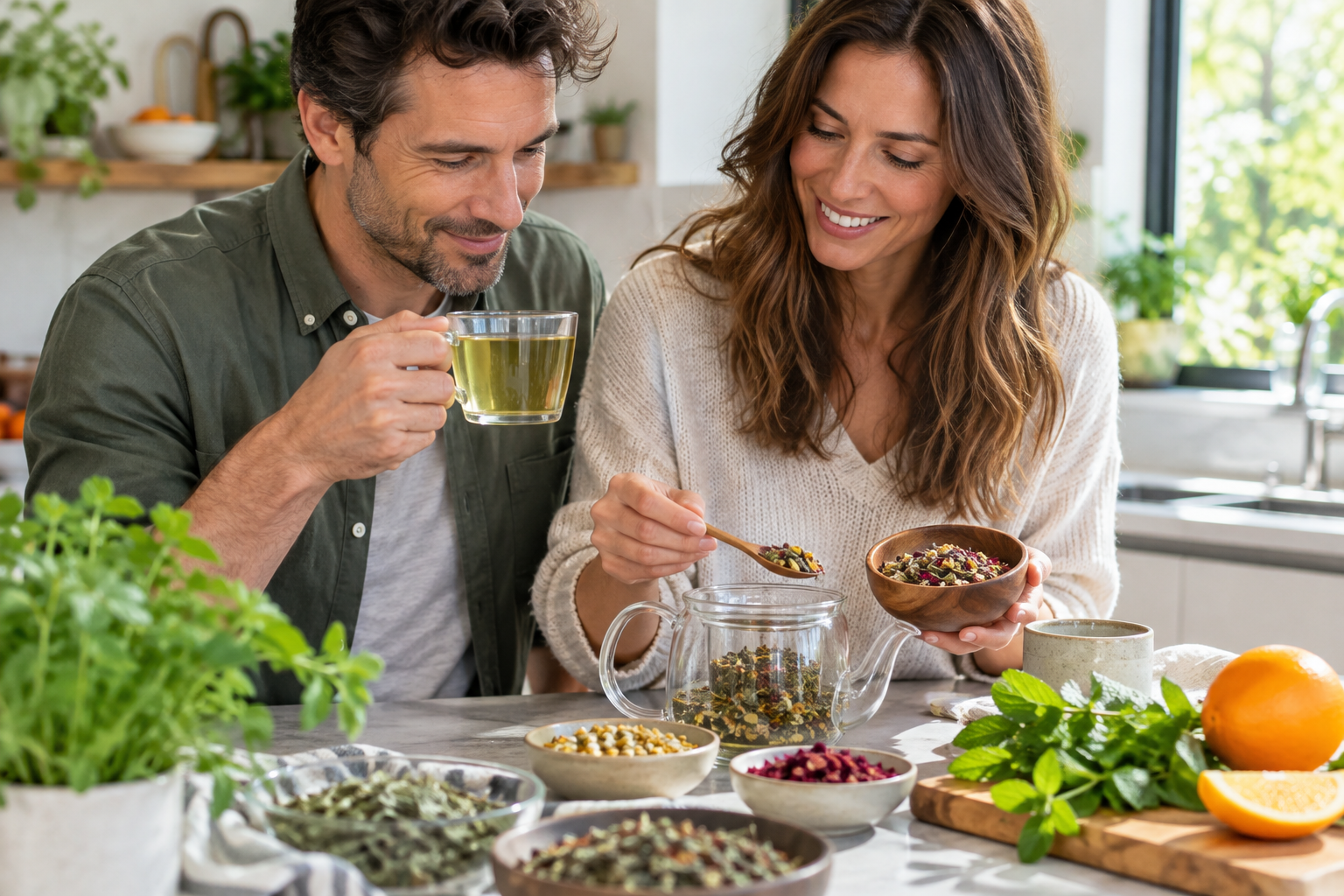
What is herbal tea? Start with the ingredients
Herbal tea is an infusion made from plant ingredients such as flowers, leaves, roots or fruit. Unlike traditional black or green tea, an all-herbal blend does not contain the tea plant, Camellia sinensis. That opens up a lovely range of flavours, from floral and minty to fruity and roasted.
Start with the ingredient list rather than the name on the front. A blend called “berry” or “bedtime” tells you its theme, but the ingredients tell you what you will actually brew. Look for the named plants, any flavourings and whether traditional tea leaves are included.
How to read herbal tea ingredients and plant names
Look for both the herb and the plant part: peppermint leaf, chamomile flower or dandelion root, for example. A botanical name can help distinguish plants with similar common names. According to the NIH Office of Dietary Supplements, botanical ingredients may be identified by their common or scientific names and the part of the plant used.
A single-ingredient tea makes it easy to explore one flavour, while a blend offers a more layered cup. If the label lists a blend's total weight without amounts for each herb, you cannot tell exactly how much of every ingredient it contains. Also distinguish dried herbs from extracts: the same plant name does not make different preparations equivalent.
Does herbal tea have caffeine?
Many herbal teas are naturally caffeine-free, but “herbal” is not a guarantee. Check for green tea, black tea, yerba mate or guarana in a mixed blend. MedlinePlus identifies tea leaves and plants such as yerba mate and guarana as sources of caffeine.
For an evening cup, look for an explicit caffeine-free description alongside the ingredient list. “Decaffeinated” is different: it describes a product with caffeine removed, and some may remain. A clearly labelled caffeine-free blend makes choosing for your bedtime routine simpler.
What do organic, natural and wellness claims mean?
If organic sourcing matters to you, look for clear organic information on the pack rather than relying on leafy artwork or the word “natural”. Treat sourcing, flavour and health claims as separate questions: an organic description does not establish that a tea will deliver a particular wellness result.
Names such as “detox”, “immune” or “sleep” describe a product's positioning, not proof of an effect. NCCIH notes that reliable evidence is insufficient to rate chamomile's clinical usefulness for many promoted uses. Its detox overview also finds no convincing research supporting detox diets for eliminating toxins. Choose a tea first for ingredients you want and a flavour you enjoy.
Herbal tea brewing instructions and serving size
Check how many bags or how much loose tea makes one serving, then follow the pack's water-volume and steeping instructions. A large mug may hold more than the suggested amount of water, changing how strong your tea tastes. Bag count and serving count are worth comparing, too.
If you prefer a bolder cup, adjust within the suggested brewing range rather than assuming more is better. Research on an herbal extract is not automatically evidence for a brewed tea made from that plant. As the NIH Office of Dietary Supplements explains, botanical preparations can differ in their composition and strength.
How to choose the best herbal tea for your routine
Match the blend to the moment. For a roasted option, explore BIOVEA's Roasted Dandelion Root Herbal Tea. If you prefer a fruit-themed blend, consider Echinacea Plus Elderberry Herbal Tea and review its full ingredient list. For a wind-down ritual, BIOVEA's caffeine-free Bedtime Tea is another option to compare by ingredients and brewing directions—not its name alone.
Keep your favourite mug and tea together so making a cup becomes an easy daily pause. Before buying, compare ingredients, caffeine information, serving count and preparation instructions; ask a healthcare professional if you have questions about whether a particular herb suits you.
Frequently asked questions
- Is all herbal tea caffeine-free?
- No. Many all-herbal infusions are caffeine-free, but blends may include tea leaves, yerba mate or guarana. Read the full ingredient list and look for a clear caffeine-free description.
- What should I look for on an herbal tea label?
- Start with the named plants and plant parts, then check flavourings, caffeine information, serving size and brewing directions. These details are more useful for comparing products than the blend name alone.
- Is organic herbal tea better than regular herbal tea?
- Organic sourcing may match your shopping preferences, but the description alone does not establish better flavour or greater health benefits. Compare the actual ingredients and choose a blend you enjoy.
- Does detox tea really remove toxins?
- The word “detox” on a tea label is not evidence that the product removes toxins. NCCIH reports no convincing research supporting detox diets for toxin elimination. Choose herbal tea for its flavour and the enjoyable ritual of making a cup.
- Is herbal tea the same as an herbal supplement?
- Not necessarily. A brewed infusion, capsule and concentrated extract can contain different amounts and combinations of plant compounds. Findings about one preparation should not automatically be applied to another.
Sources
Jack used these official and scientific sources for this article.
This article is educational. Food supplements are not a substitute for a varied diet or medical care. Speak to a healthcare professional about your own situation.
Related reading
Food & Home
Healthy Pantry Staples: How to Choose the Right Format
Stocking your kitchen with nutrient-dense foods makes healthy eating effortless every day of the week. Learn how to choose between powders, whole seeds, and liquid pantry staples to fit your unique lifestyle.
7 min read
Read more
Food & Home
Herbal Tea Guide: How to Choose the Right Herbal Tea Format
Sipping a warm mug of herbal tea is one of the easiest ways to bring relaxation and vibrant natural flavors into your daily routine. Whether you prefer the convenience of traditional tea bags or robust herbal root brews, finding your ideal format can elevate your daily wellness ritual.
7 min read
Read more
Food & Home
Apple Cider Vinegar: How to Choose the Right Format for You
Discovering the daily benefits of apple cider vinegar is easier than ever thanks to a variety of versatile liquid and convenient capsule options. Here is Jack's guide to picking the ideal ACV format to seamlessly match your personal lifestyle and taste.
7 min read
Read moreCountry & language
1 published versions of this article.