
Herbs & Botanicals
Ginseng Capsules, Liquid Drops or Tea: Which Is Best?
Ginseng comes in several easy-to-use formats, from no-fuss capsules to warming tea. I’m Jack, BIOVEA Wellness Advisor—here’s how to compare your options and choose a format that suits your routine.
- Written by
 Jack· BIOVEA Wellness Advisor
- Published
- September 25, 2026
- Last reviewed
- September 26, 2026
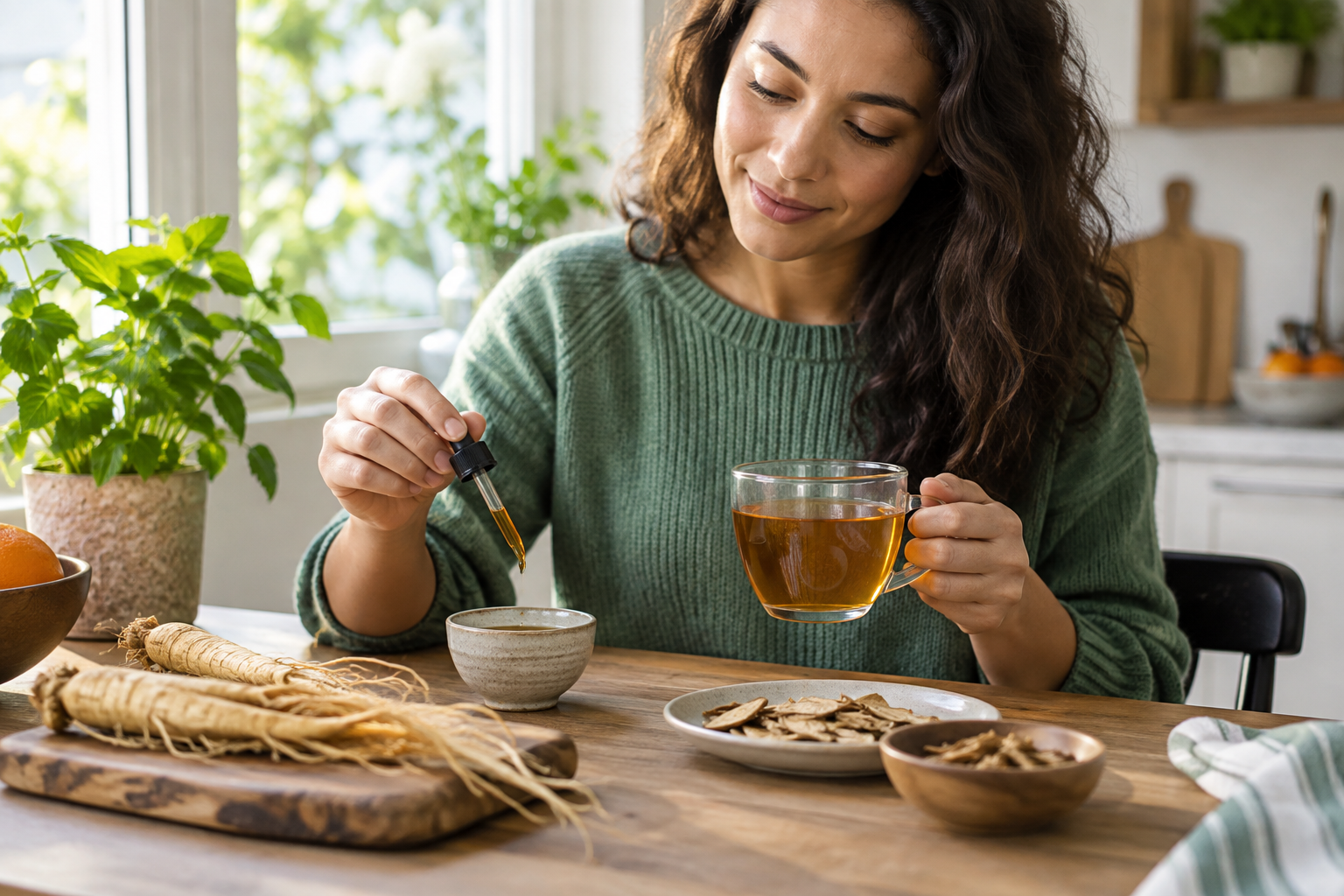
What is ginseng, and what are its benefits?
Ginseng is a botanical with a long history of use and plenty of modern-day interest, especially among shoppers exploring energy and general wellness supplements. According to NCCIH, Asian ginseng has been studied for several purposes, but research does not firmly establish many of the benefits often advertised.
Before choosing capsules, drops or tea, check the plant name. Asian or Korean ginseng is Panax ginseng, while American ginseng is Panax quinquefolius. So-called Siberian ginseng is a different plant—not another form of Panax ginseng.
Ginseng capsules: convenient and easy to compare
Capsules are an appealing choice if you want a straightforward addition to your morning routine. They avoid the earthy taste of ginseng and provide a measured amount per capsule, with no brewing or liquid measuring needed.
BIOVEA’s PANAX GINSENG 200mg 120 Vegetarian Capsules is one capsule option to explore. When comparing products, look beyond the number on the front: root powder and concentrated extract are not interchangeable, so milligrams alone do not tell you which product is more concentrated.
Some extracts list a standardized ginsenoside content. Ginsenosides are compounds found in Panax ginseng, and a declared amount can help you compare similarly specified extracts. It does not, by itself, prove that a product will work better for you.
Ginseng liquid drops vs capsules
Liquid drops offer a capsule-free option for people who prefer a liquid serving. Depending on the product directions, they may be taken directly or mixed into a drink. BIOVEA’s GINSENG COMPLEX LIQUID DROPS is a format worth exploring if that flexibility appeals to you.
Compare the serving volume, amount of ginseng per serving and full ingredient list. A product called a “complex” may contain more than one ingredient, so it is worth distinguishing a blend from a single-herb formula.
Do not assume liquid ginseng absorbs faster or delivers stronger benefits than capsules. The sources here do not establish that one format is superior; the specific preparation and your preference matter more than a liquid-versus-solid shortcut.
Ginseng tea vs powder: taste and everyday ritual
Ginseng tea suits shoppers who enjoy the ritual of preparing a warm drink. Its earthy flavour can be part of the appeal, and tea offers a different experience from taking a capsule. Check whether you are buying ginseng root, an instant preparation or a tea blend containing other herbs.
Powder offers another hands-on option, with some products intended for mixing into food or drinks. Follow the product’s measured serving rather than estimating with an ordinary kitchen spoon.
Tea, root powder and extracts should not be treated as equivalent servings. Preparation method, extract concentration and the amount of actual ginseng can differ substantially. A cup of tea is not automatically comparable to a capsule carrying the same plant name.
Korean red ginseng vs white ginseng: what is the difference?
Red and white ginseng describe processing methods rather than capsule or liquid formats. NCCIH explains that Asian ginseng can be prepared as red or white ginseng: red ginseng is steamed and dried, while white ginseng is dried without steaming.
You can therefore find red ginseng in more than one delivery format. Start with the species and preparation you want, then choose how you prefer to take it. “Red,” “Korean” or “liquid” on the front of a pack does not, on its own, establish better results.
How to choose the best ginseng supplement
My practical shortlist is simple: capsules for a measured, taste-free serving; drops for a capsule-free routine; tea for a warming ritual; and powder for products designed to be mixed. Compare the botanical name, plant part, serving size, extract information and any added ingredients before deciding.
For timing, follow the product directions rather than assuming ginseng belongs in a bedtime routine. Difficulty sleeping is the most commonly reported side effect noted by NCCIH, so earlier in the day is a more practical starting point than late evening.
Check the label, and ask a pharmacist or another healthcare professional if you have questions—especially if you take medicines, are pregnant or are breastfeeding.
Frequently asked questions
- Is liquid ginseng better than capsules?
- Neither format is established as universally better. Drops offer a liquid serving, while capsules are convenient and avoid the herb’s taste. Compare the ingredients and preparation, not just the format.
- What is the difference between ginseng root powder and extract?
- Root powder is ground plant material. An extract is made by extracting constituents from that material and may be concentrated or standardized. Equal milligram amounts do not necessarily represent equivalent preparations.
- Is Korean ginseng the same as Panax ginseng?
- Korean ginseng commonly refers to Panax ginseng, also called Asian ginseng. Look for the botanical name on the label to confirm the species. American ginseng is Panax quinquefolius.
- Does ginseng give you energy?
- Ginseng is often marketed for energy, and some research suggests Asian ginseng may have a small effect on general fatigue. Results are not consistent, and it is not a guaranteed energy boost.
- Can I swap ginseng tea for ginseng capsules?
- You can choose whichever format you prefer, but do not assume their servings are equivalent. Tea strength and extract concentration vary, so use the directions for the specific product.
Sources
Jack used these official and scientific sources for this article.
This article is educational. Food supplements are not a substitute for a varied diet or medical care. Speak to a healthcare professional about your own situation.
Related reading

Herbs & Botanicals
Ginkgo Biloba Benefits and How to Use It Daily
Unlock your mental potential with Ginkgo biloba, one of the world's oldest and most trusted botanical supplements. Discover how this ancient herb supports focus, circulation, and memory, plus tips on picking the right format for your wellness routine.
7 min read
Read more
Herbs & Botanicals
Turkey Tail Mushroom Benefits and How to Use It
Turkey tail mushroom is one of the most popular functional mushrooms known for supporting everyday wellness and vitality. In this guide, I will share the key benefits of turkey tail and how to easily incorporate it into your daily routine.
7 min read
Read more
Herbs & Botanicals
Hawthorn: Benefits and How to Use It for Daily Wellness
Discover how hawthorn berry can support your active lifestyle and overall cardiovascular wellness. Learn about its traditional herbal uses, key benefits, and how to choose the right supplement format for your routine.
7 min read
Read moreCountry & language
1 published versions of this article.