
Personal Care
Everyday First Aid: Bandages, Gauze and Cold Packs Compared
A useful first aid kit starts with practical formats, not a long shopping list. I’m Jack, BIOVEA Wellness Advisor—here’s how to choose everyday essentials for small cuts, scrapes and bumps.
- Written by
 Jack· BIOVEA Wellness Advisor
- Published
- September 25, 2026
- Last reviewed
- September 27, 2026
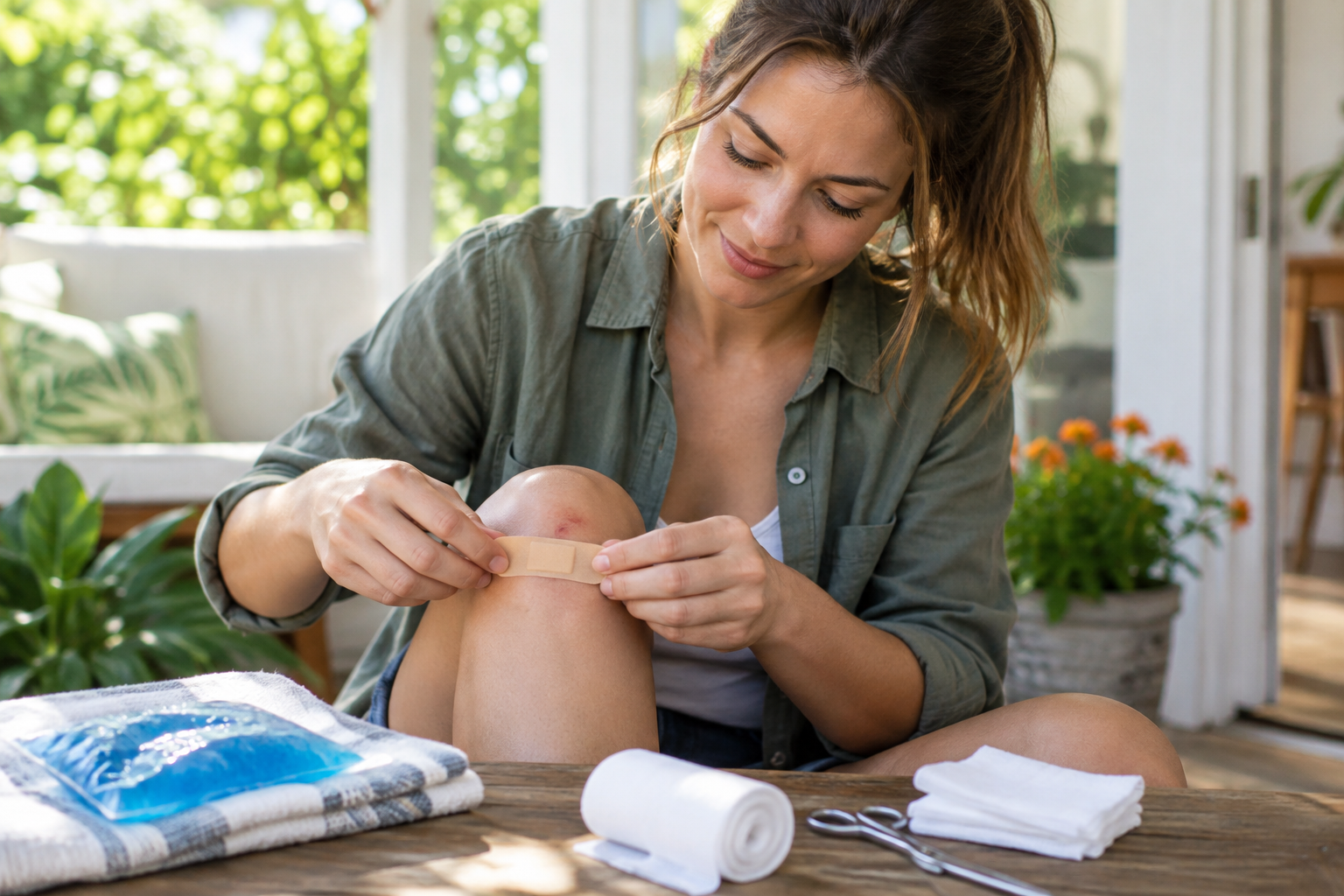
First aid kit essentials: what do you actually need?
The best everyday first aid kit makes the basics easy to find: something to clean a small wound, something to cover it and a cold pack for a minor bump. Adhesive bandages, sterile gauze, non-stick dressings and medical tape each have a different job.
Choose supplies around everyday situations rather than buying every available format. A few bandage sizes suit small nicks, while separate dressings and tape give you more flexibility for larger scrapes. Keep everything together in a clearly marked container.
Adhesive bandages: fabric vs waterproof
Adhesive bandages combine a small wound pad and an adhesive border in one piece. They are a convenient choice for minor cuts when the pad completely covers the wound. Flexible fabric styles can feel comfortable on moving areas; waterproof styles are designed to help keep water out when their edges seal properly.
Look at pad size, not just the overall dimensions of the strip. Dry the surrounding skin before applying a bandage so the adhesive can grip, and replace it if it becomes wet or dirty. A waterproof label does not mean you can leave a damp or loosened dressing in place.
Sterile gauze vs non-stick dressings
Sterile gauze pads are versatile kit staples: they can be used to apply direct pressure to a bleeding cut and to cover a wound. Non-stick dressings are designed to be less likely to adhere to the wound surface, making them an appealing choice for covering superficial scrapes.
Unlike adhesive bandages, plain pads usually need medical tape or a gauze wrap to hold them in place. Choose a pad large enough to cover the whole wound, with tape attached to the surrounding skin rather than across the injured surface. Secure the dressing without wrapping tightly.
Wound cleaning: running water vs antiseptic liquids
For a minor cut, the first step is simpler than the wound-care aisle might suggest. MedlinePlus recommends washing your hands, using direct pressure to stop bleeding and cleaning the wound with mild soap and water. Clean running water is a practical starting point—not a second-best option.
A spray bottle or liquid format can be convenient to dispense, but the container alone does not tell you whether its contents belong on an open wound. Keep the purpose clear when shopping: wound cleansing is different from disinfecting surfaces or cleaning intact skin. Alcohol and hydrogen peroxide are not necessary for routine cleaning of a small cut and can damage healing tissue.
Cold packs: instant vs reusable
Instant cold packs are handy in a travel or outdoor kit because they do not need a freezer. Reusable cold packs suit home routines: chill them as directed and keep them ready for occasional minor bumps. Their main difference is convenience rather than a promise of better results.
Use a cloth between the cold pack and your skin, and apply it for short intervals rather than continuously. Cold packs are for cooling the area around a minor injury; they do not replace cleaning and covering broken skin.
How to organise a home and travel first aid kit
For home, group supplies by task: cleaning, covering and cooling. For a small travel pouch, prioritise individually wrapped bandages, sterile pads, tape and an instant cold pack. Leave sterile dressings in their original packaging until needed, and replace opened or damaged packs.
My practical pick is variety without clutter: a few useful sizes and clearly labelled formats beat a box full of duplicates. Check product labels or ask a healthcare professional if you have questions; deep wounds, bleeding that will not stop or signs of infection need medical attention.
Frequently asked questions
- What is the difference between a bandage and a dressing?
- A dressing is the material placed over a wound. A bandage can hold a dressing in place or provide support. An adhesive bandage combines a wound pad and adhesive backing in one ready-to-use format.
- Is gauze or a non-stick dressing better for a scrape?
- A non-stick dressing is often convenient for covering a superficial scrape because it is designed to reduce sticking. Sterile gauze is useful for applying direct pressure and can also serve as a covering.
- How often should you change a bandage on a small cut?
- MedlinePlus recommends changing the bandage daily and whenever it becomes wet or dirty. Replace it sooner if it loosens and no longer protects the wound.
- Do you need antiseptic spray in a basic first aid kit?
- Not necessarily. For routine cleaning of minor cuts, mild soap and water are usually enough. Bandages, sterile dressings and tape may be more useful starting purchases than several different cleansing products.
Sources
Jack used these official and scientific sources for this article.
This article is educational. Food supplements are not a substitute for a varied diet or medical care. Speak to a healthcare professional about your own situation.
Related reading

Personal Care
Everyday First Aid Kit Essentials: How to Choose the Right Format
Building a versatile first aid kit means selecting the ideal format for every minor bump, soreness, or skin discomfort. From soothing topical gels to convenient quick-dissolving pellets, here is how to pick the right format to keep your family feeling great.
7 min read
Read more
Personal Care
Foot Care: How to Choose the Right Foot Care Products & Formats
Taking care of your feet is essential for daily comfort, mobility, and overall wellness. Discover how to choose the best foot care formats to pamper your feet and keep them feeling refreshed.
7 min read
Read more
Personal Care
Hand Care Guide: How to Choose the Best Hand Cream, Lotion, or Balm
Keeping your hands soft, hydrated, and smooth is easier than ever when you know which formula fits your lifestyle best. Join Jack as he breaks down daily hand lotions, rich creams, and intense balms so you can pick your perfect pair.
7 min read
Read moreCountry & language
1 published versions of this article.