
Vitamins
Vitamin D: forms, intake and the questions people actually ask
Vitamin D is made in the skin from sunlight and also comes from a short list of foods and supplements. Most labels offer either D2 or D3, measured in micrograms (mcg) or International Units (IU) — and for many people the real question is not which brand, but how much they already get.
- Written by
 Jack· BIOVEA Wellness Advisor
- Published
- August 12, 2026
- Last reviewed
- September 18, 2026
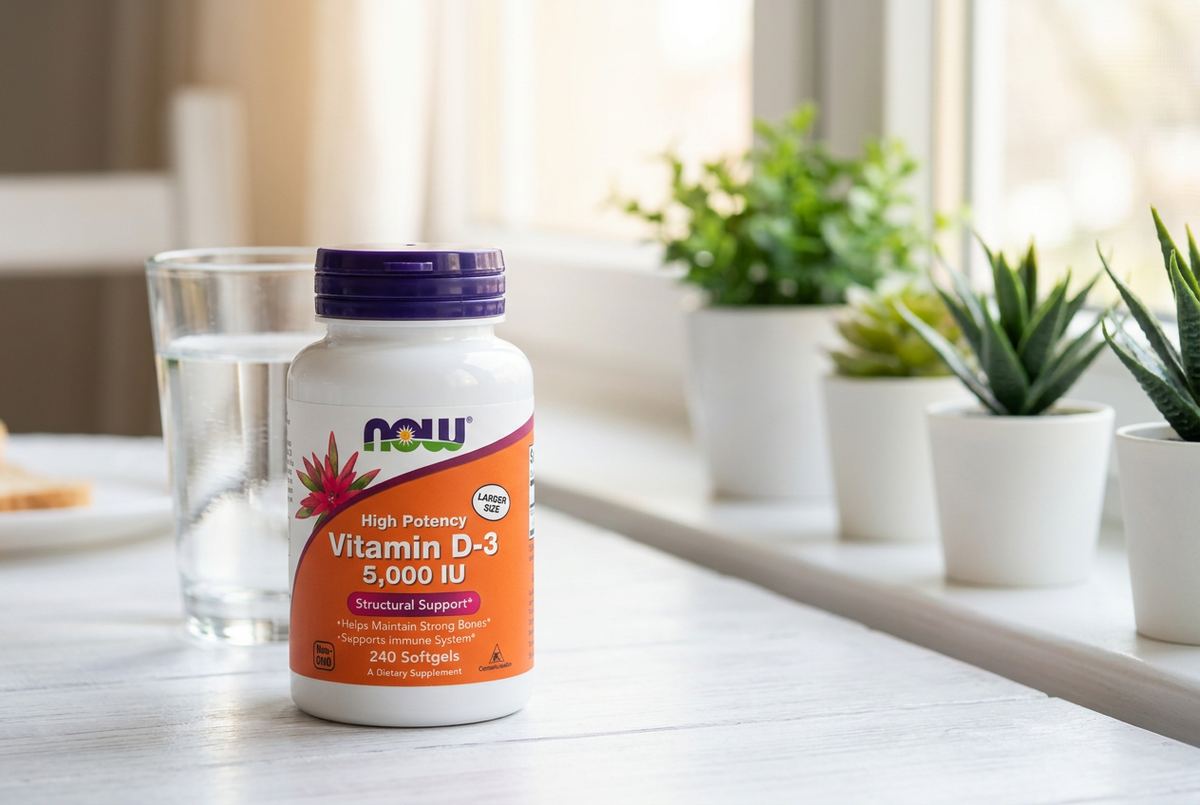
Vitamin D comes up in almost every conversation about winter, bones and general wellbeing — which is exactly why it attracts so much confusing advice. This guide sticks to what is well established: what the nutrient is, the two forms you will see on a label, how the units work, and which questions are worth taking to a healthcare professional rather than a search engine.
What vitamin D actually is
Vitamin D is a fat-soluble nutrient. Unlike vitamin C, which the body flushes out quickly, fat-soluble nutrients are stored in body fat and the liver, so intake over weeks matters more than what happened yesterday. The body can make vitamin D itself when skin is exposed to UVB light, which is why it is often described as the sunshine vitamin — and why latitude, season, time outdoors, clothing and skin tone all change how much someone produces.
Diet contributes too, though from a fairly short list: oily fish, egg yolks, some mushrooms, and foods that are fortified in a given country. Fortification rules differ by market, so a breakfast cereal in one country may contribute vitamin D while the same-looking product elsewhere does not.
D2 and D3: what the difference means on a label
Two forms are used in supplements. Vitamin D2 (ergocalciferol) is produced from yeast or fungi. Vitamin D3 (cholecalciferol) is the form your own skin makes; in supplements it is usually derived from lanolin in sheep's wool, though algae-derived D3 exists and is the form to look for if you follow a vegan diet.
Both forms are recognised as vitamin D in food and supplement law, and both count towards the amount printed on the label. The practical differences most people care about are dietary suitability and the format of the product — softgels in oil, plain tablets, drops, or sprays.
| Vitamin D2 | Vitamin D3 | |
|---|---|---|
| Chemical name | Ergocalciferol | Cholecalciferol |
| Typical origin | Yeast or fungi exposed to UV | Lanolin, or algae for vegan products |
| Made by the human body | No | Yes, in skin exposed to UVB |
| Common formats | Tablets, fortified foods | Softgels, drops, sprays, tablets |
Reading the units: mcg, IU and %NRV
Vitamin D labels use two units, often side by side, and the conversion is fixed: 1 microgram (mcg or µg) equals 40 International Units (IU). So 10 mcg is 400 IU, 25 mcg is 1000 IU, and 50 mcg is 2000 IU. A product that looks ten times stronger than another may simply be quoting IU while its neighbour quotes micrograms.
European labels also show %NRV — the Nutrient Reference Value, a single labelling figure used across the EU and UK so shoppers can compare products. It is a reference point for the label, not a personal target. North American labels use %DV, the Daily Value, in the same spirit. Neither number is a recommendation for you specifically.
- 1 mcg = 40 IU. Convert before comparing two products.
- %NRV and %DV are labelling references for comparison, not individual advice.
- Check the serving size: a figure may apply to two softgels rather than one.
- Look at the form (D2 or D3) and, if it matters to you, its source.
How much do people need?
This is the question with the least universal answer, because official intake recommendations are set nationally and vary between countries — and because the right amount for an individual depends on how much they already get from sun and diet. National health bodies publish reference intakes for adults, children, pregnancy and older age, and several also publish upper limits that should not be exceeded from supplements without medical supervision.
The honest, useful advice is therefore process rather than a number: look up the recommendation published by the health authority in your own country, consider your own sun exposure and diet, and if you are unsure — or if you are pregnant, taking prescription medicines or managing a health condition — ask a pharmacist or doctor. A blood test is the only way to know your own vitamin D status, and it is a conversation worth having rather than guessing with higher and higher doses.
Who most often asks about vitamin D
Several groups come up repeatedly in national guidance because their own production or intake tends to be lower: people who spend little time outdoors, people who cover most of their skin, people with darker skin tones living at high latitudes, older adults, and anyone living through a long winter at northern or southern latitudes where UVB is weak for months.
That does not mean everyone in these groups needs a supplement, and it certainly does not mean a supplement replaces the rest of a diet. It means the question is reasonable to ask — and that a pharmacist can usually answer it in a couple of minutes with your own circumstances in front of them.
Choosing between two products
Once you know the amount you are looking for, comparing products becomes fairly mechanical. Convert both labels to the same unit. Check how many capsules or drops make up a serving. Check the form and its source if you avoid animal-derived ingredients. Look at the other ingredients — oil carriers, gelatin or vegetarian capsule shells, and any added nutrients such as vitamin K2 that change what the product is.
Format matters more than people expect, because the best product is the one actually taken. Drops suit people who dislike swallowing capsules; a once-weekly higher-strength product suits someone who forgets a daily routine, where national guidance supports that pattern.
Storage and shelf life
Keep vitamin D products in a cool, dry place away from direct light, close the cap properly, and respect the best-before date printed on the pack. Oil-based softgels and liquid drops are more sensitive to heat than dry tablets, so a bathroom shelf above a hot shower is a poor home for them. A kitchen cupboard away from the hob is usually better than a windowsill.
The bottom line
Vitamin D is unusual among nutrients because sunlight, season and where you live change your own supply. That makes labels only half the story. Learn the units, understand the two forms, then check the recommendation published for your own country and ask a professional if your situation is not straightforward. It is a short conversation that saves a lot of guesswork.
Frequently asked questions
- Is 1000 IU the same as 25 mcg?
- Yes. The conversion is fixed at 1 mcg = 40 IU, so 1000 IU is 25 mcg.
- Is vegan vitamin D3 available?
- Yes. Most D3 comes from lanolin, but algae-derived D3 exists and is labelled as suitable for vegans. Vitamin D2 from UV-exposed yeast or fungi is also plant-sourced.
- Should I take vitamin D with food?
- Vitamin D is fat-soluble, so many people take it with a meal containing some fat. Follow the directions on your product's label.
- Can I get enough from sunlight alone?
- It depends on latitude, season, time outdoors, clothing and skin tone. At higher latitudes, UVB is too weak for skin production during winter months, which is why national guidance in those countries often addresses winter specifically.
Sources
Jack used these official and scientific sources for this article.
This article is educational. Food supplements are not a substitute for a varied diet or medical care. Speak to a healthcare professional about your own situation.
Related reading
Supplements
Magnesium: the types on the shelf and how they differ
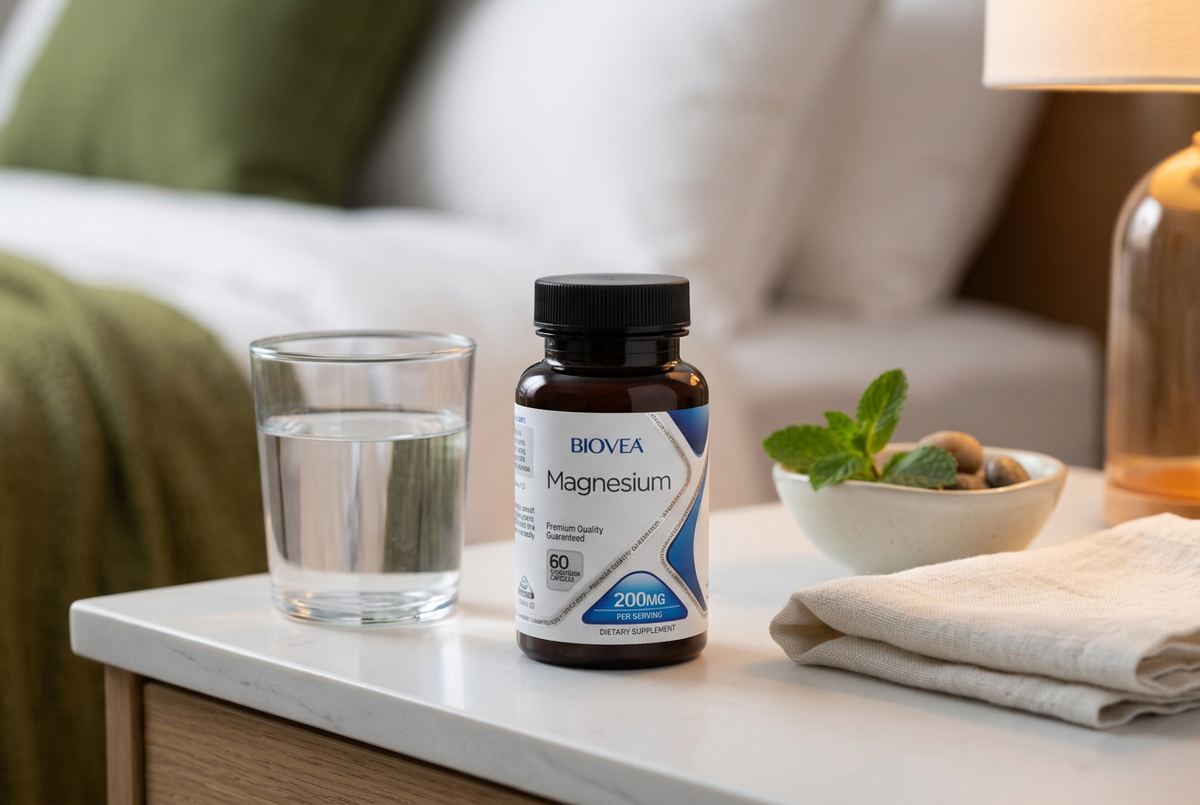
Magnesium is always paired with something else in a supplement — citrate, glycinate, oxide, malate — and that partner changes the tablet size, how it is tolerated and how much elemental magnesium you actually get per serving.
8 min read
Read more
Vitamins
How to choose a multivitamin without guessing
A multivitamin is a convenience product: a spread of nutrients at modest amounts. Choosing one sensibly means matching the formula to the gaps in your own diet and life stage, then reading the panel rather than the front of the box.
7 min read
Read more
Ingredient Guides
Understanding supplement labels and serving sizes
Almost every confusing supplement comparison comes down to three lines on the pack: the serving size, the amount per serving, and the reference percentage next to it. Learn those and the shelf gets much quieter.
6 min read
Read moreCountry & language
3 published versions of this article.
- Canada — EN
- Canada — FR
- USA — EN
- Belgique / België — FR
- Cyprus — EN
- Czech Republic — EN
- Deutschland — DE
- Finland — EN
- France — FR
- Hungary — EN
- Ireland — EN
- Österreich — DE
- Rest of Europe — EN
- Romania — EN
- Slovenia — EN
- Sweden — EN
- Schweiz / Suisse / Svizzera — DE
- Schweiz / Suisse / Svizzera — FR
- UK — EN
- Australia — EN
- Hong Kong — EN
- India — EN
- Israel — EN
- Malaysia — EN
- New Zealand — EN
- Qatar — EN
- Singapore — EN
- Thailand — EN