
Vitamins
How to choose a multivitamin without guessing
A multivitamin is a convenience product: a spread of nutrients at modest amounts. Choosing one sensibly means matching the formula to the gaps in your own diet and life stage, then reading the panel rather than the front of the box.
- Written by
 Jack· BIOVEA Wellness Advisor
- Published
- July 15, 2026
- Last reviewed
- September 2, 2026

Multivitamins are the most bought and least compared supplements on the shelf. Two tubs at very different prices often contain a similar spread of nutrients, while two tubs at the same price can differ in the handful of things that matter for you. A short, structured look at the label settles it faster than reading the marketing.
What a multivitamin is for
A multivitamin is broad rather than deep: many nutrients at modest amounts, designed as general cover rather than to address a specific need. If you have a particular reason to focus on one nutrient, a single-nutrient product is usually clearer and easier to dose than hunting for a multivitamin that happens to contain more of it.
Start with life stage
Formulas are commonly differentiated for adults, people over fifty, pregnancy and children, and those differences are real rather than cosmetic. Prenatal formulas are built around folate and iodine guidance, while products aimed at older adults usually emphasise vitamin D and B12. A children's product exists because upper limits are lower for smaller bodies — which is also why an adult product should never simply be halved for a child.
Read the panel, not the front
Turn the pack over and look for four things: the serving size, the nutrient list with amounts and %NRV or %DV, the forms used, and anything added beyond vitamins and minerals. Three tablets a day at a low per-tablet amount may be less convenient than one tablet at a higher amount; the front of the box rarely makes that obvious.
- Serving size: how many tablets or capsules the amounts refer to.
- Amounts with %NRV or %DV, so two products can be compared on the same basis.
- Forms: for example folate as folic acid or as methylfolate, B12 as cyanocobalamin or methylcobalamin.
- Extras: botanical blends or 'proprietary blends' where individual amounts are not disclosed.
Iron deserves a specific mention. Many adult multivitamins deliberately omit it, because routine iron intake is not appropriate for everyone. If you are considering an iron-containing product, that is a question for a pharmacist or doctor rather than a shelf decision.
Format is not a detail
Tablets, capsules, gummies and powders all end up unused if they do not fit your morning. Gummies are easier for people who dislike swallowing tablets but usually carry fewer nutrients per serving and may contain added sugars. A large one-a-day tablet suits people who want the whole thing done in one step.
What to expect — and what not to
A multivitamin is intended to help close dietary gaps. It is not a treatment for any condition, it will not compensate for persistent poor sleep or an unvaried diet, and reputable labels do not promise outcomes. If a product's marketing sounds like a prescription, that is a reason for scepticism rather than interest.
The bottom line
Choose by life stage, compare the panels on the same units, check the forms and extras, and be honest about the format you will keep taking. That is the whole method — and it takes about two minutes in front of the shelf.
Frequently asked questions
- Is a more expensive multivitamin better?
- Not necessarily. Price can reflect nutrient forms, capsule materials or brand positioning. Compare the panels before drawing conclusions.
- Should I take it with food?
- Many multivitamins are better tolerated with a meal, and fat-soluble vitamins are absorbed alongside dietary fat. Follow the label directions.
- Can I take a multivitamin alongside a single-nutrient supplement?
- Sometimes, but the amounts add up and some nutrients have upper limits. Check both labels and ask a pharmacist if you are unsure.
Sources
Jack used these official and scientific sources for this article.
This article is educational. Food supplements are not a substitute for a varied diet or medical care. Speak to a healthcare professional about your own situation.
Related reading
Vitamins
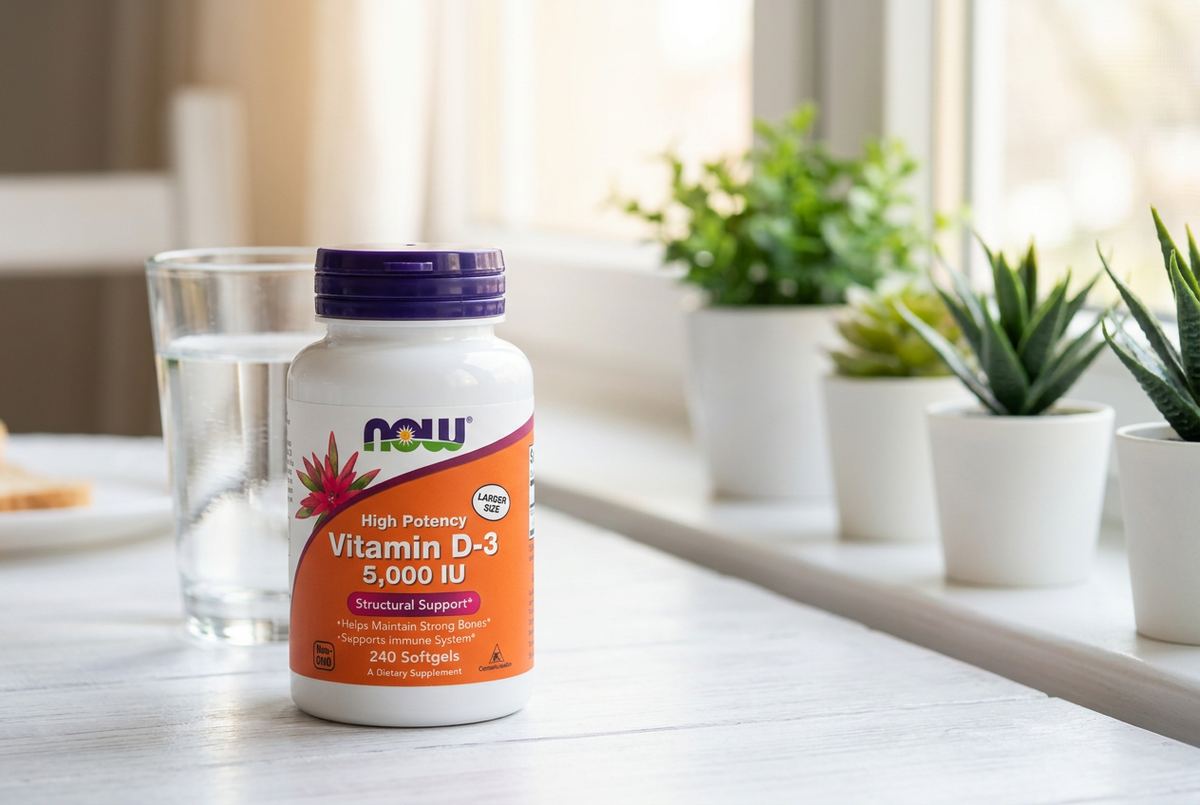
Vitamin D: forms, intake and the questions people actually ask
Vitamin D is made in the skin from sunlight and also comes from a short list of foods and supplements. Most labels offer either D2 or D3, measured in micrograms (mcg) or International Units (IU) — and for many people the real question is not which brand, but how much they already get.
9 min read
Read more
Ingredient Guides
Understanding supplement labels and serving sizes
Almost every confusing supplement comparison comes down to three lines on the pack: the serving size, the amount per serving, and the reference percentage next to it. Learn those and the shelf gets much quieter.
6 min read
Read more
Supplements
Magnesium: the types on the shelf and how they differ
Magnesium is always paired with something else in a supplement — citrate, glycinate, oxide, malate — and that partner changes the tablet size, how it is tolerated and how much elemental magnesium you actually get per serving.
8 min read
Read moreCountry & language
1 published versions of this article.