
Food & Home
Chia Seeds: Whole vs Ground vs Soaked vs Chia Oil
From creamy chia pudding to easy smoothie add-ins, the best chia format depends on what you love to make. I’m Jack, BIOVEA Wellness Advisor—here’s my practical guide to choosing and using these versatile seeds.
- Written by
 Jack· BIOVEA Wellness Advisor
- Published
- September 25, 2026
- Last reviewed
- September 27, 2026
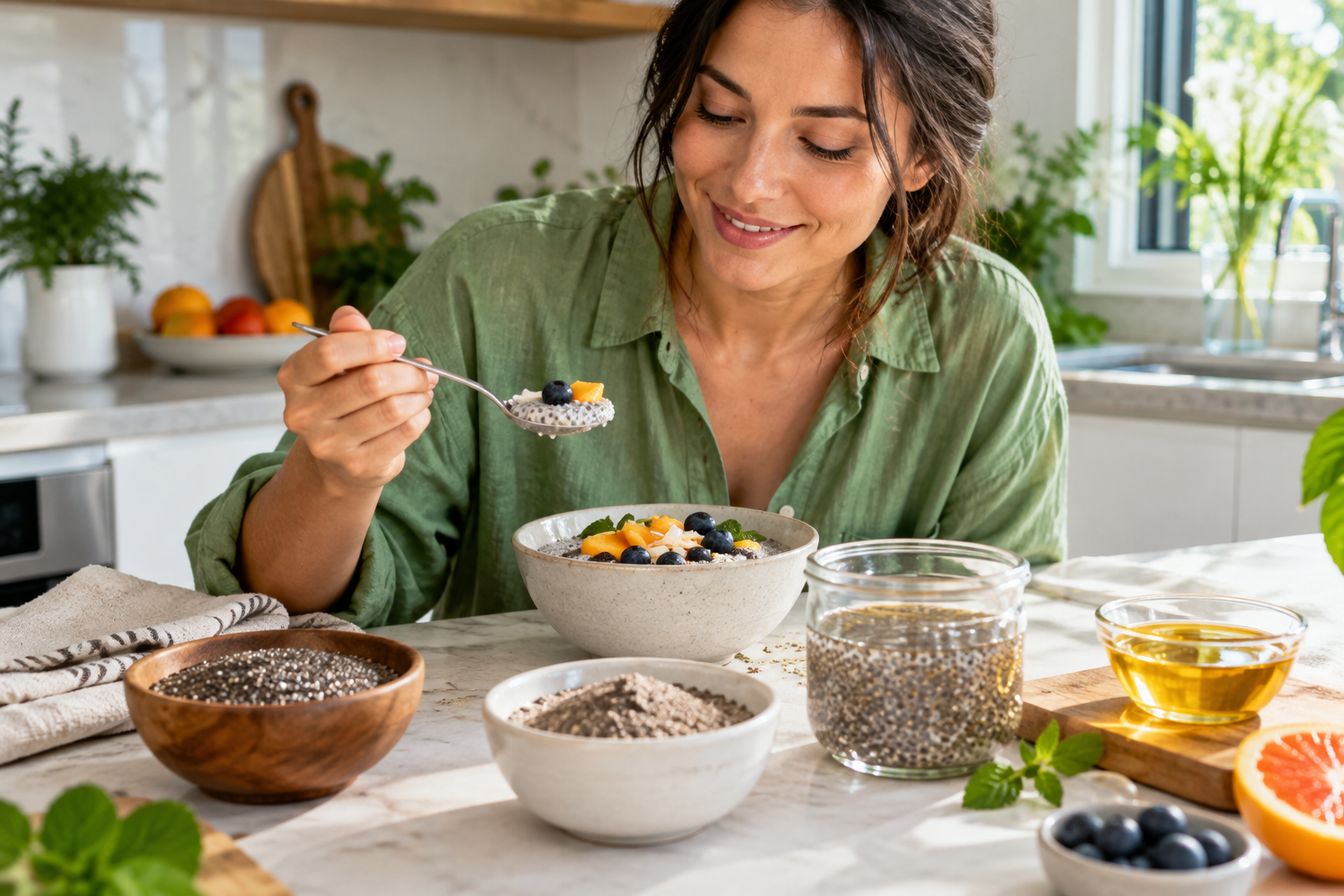
Chia seeds benefits: what each format brings
Chia seeds offer a mild flavour and plenty of kitchen possibilities. Whole and ground seeds provide fibre, plant-based protein and fat, including the omega-3 alpha-linolenic acid (ALA). According to the NIH Office of Dietary Supplements, chia seeds are a food source of ALA, an essential fatty acid we need to get from our diet.
The biggest differences between formats are texture and convenience. Whole seeds add a little crunch, ground chia blends into recipes more discreetly, and soaked seeds make a spoonable gel. Chia oil is a different proposition: it supplies fat rather than the fibre and protein found in the seeds.
Whole chia seeds: best for everyday versatility
Whole chia seeds are a handy starting point because one bag can cover several uses. Stir them into porridge, mix them into yoghurt and let them soften, or soak them for pudding. Their understated flavour works with fruit, cocoa, cinnamon and savoury ingredients alike.
If you want a versatile cupboard staple, BIOVEA’s CHIA SEEDS (Organic, Plant-Based, Superfood), 227g, is an option to explore. You can use the seeds whole, soak a portion or grind a small batch at home—no need to buy every format separately.
Ground chia seeds vs whole: best for smoothies and baking
Ground chia is useful when you want less noticeable seed texture. Blend it into smoothies, stir it into porridge or add a little to pancake and muffin mixtures. It still absorbs liquid, so expect recipes to thicken and adjust the liquid gradually.
For ordinary ground whole chia, grinding changes the particle size rather than removing the seed’s fibre. Products sold as “chia flour” or “chia powder” can vary, however: some are partially defatted. For a simple homemade version, pulse whole seeds in a clean spice grinder and prepare small batches.
Soaked chia seeds: how to make chia pudding and chia eggs
Soaked chia is simply whole or ground chia mixed with liquid—not a separate type of seed. For an easy pudding, combine 2 tablespoons of whole chia seeds with about 120ml of milk or a plant-based alternative. Stir well, stir again after 5–10 minutes, then refrigerate for at least 2 hours or overnight. Add more liquid if you prefer a looser texture.
For a “chia egg”, mix 1 tablespoon of ground chia with 3 tablespoons of water and leave it for about 10–15 minutes to gel. It can help bind pancakes, muffins and some biscuits, although it won’t reproduce every function of an egg—especially in recipes that rely on whipped eggs for lift.
Chia seed oil vs chia seeds: what’s the difference?
Food-grade chia seed oil offers a way to add ALA-containing fat without seed texture or thickening. It can suit dressings and finishing drizzles, but it won’t make chia pudding or replace whole seeds in recipes that need their gel-forming qualities.
Choose the seeds if fibre is part of your goal; chia oil doesn’t provide their fibre or protein. Also, plant omega-3s aren’t identical to fish-derived omega-3s: the NIH explains that the body converts only small amounts of ALA into EPA and DHA. Think of chia oil as a culinary option, not a like-for-like replacement for every omega-3 source.
How to choose chia seeds and fit them into your routine
My quick chooser: pick whole chia for flexibility, ground chia for a finer texture, soaked chia for make-ahead breakfasts, and food-grade chia oil for dressings without thickening. Compare products in the same format by cost per weight and pack size, and consider whether you’ll enjoy preparing chia yourself or prefer a ready-made option.
Start with one repeatable habit, such as stirring a small spoonful into overnight oats. MedlinePlus recommends increasing dietary fibre gradually, so build up rather than adding large amounts at once. Keep dry seeds sealed in a cool, dry place and refrigerate prepared pudding. Check the product label or ask a qualified professional if you have questions.
Frequently asked questions
- Do you need to grind chia seeds?
- Not for everyday cooking: whole chia works well in pudding, overnight oats and porridge. Grinding is mainly useful when you prefer a finer texture or want chia to blend more evenly into a recipe.
- Are black or white chia seeds better?
- Both work well for the same kitchen uses. Choose based on appearance and preference rather than expecting colour alone to deliver a meaningful nutritional advantage.
- How long should you soak chia seeds?
- They begin to gel within minutes. For pudding, allow at least 2 hours in the refrigerator, or leave them overnight for a more evenly hydrated texture. Stir twice early on to help prevent clumps.
- Can you use chia powder instead of whole chia seeds?
- Often, yes, but the texture changes: ground chia makes a finer, less visibly seedy mixture and may thicken differently. If your powder is defatted chia flour rather than ground whole seeds, follow a recipe designed for that product.
Sources
Jack used these official and scientific sources for this article.
This article is educational. Food supplements are not a substitute for a varied diet or medical care. Speak to a healthcare professional about your own situation.
Related reading
Food & Home
Healthy Pantry Staples: How to Choose the Right Format
Stocking your kitchen with nutrient-dense foods makes healthy eating effortless every day of the week. Learn how to choose between powders, whole seeds, and liquid pantry staples to fit your unique lifestyle.
7 min read
Read more
Food & Home
Herbal Tea Guide: How to Choose the Right Herbal Tea Format
Sipping a warm mug of herbal tea is one of the easiest ways to bring relaxation and vibrant natural flavors into your daily routine. Whether you prefer the convenience of traditional tea bags or robust herbal root brews, finding your ideal format can elevate your daily wellness ritual.
7 min read
Read more
Food & Home
Apple Cider Vinegar: How to Choose the Right Format for You
Discovering the daily benefits of apple cider vinegar is easier than ever thanks to a variety of versatile liquid and convenient capsule options. Here is Jack's guide to picking the ideal ACV format to seamlessly match your personal lifestyle and taste.
7 min read
Read moreCountry & language
1 published versions of this article.